Wednesday, February 23, 2011

Fastidious Flicker


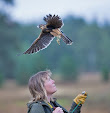
Yesterday, I noticed dirt flying in the backyard and found this Northern Flicker's head poking out of a hole in the ground. She was digging out a big ant hill, and had drilled almost a foot down in the loose soil. She'll have to find another food source in the next few days with "winter storm warnings," "powerful arctic storm," and high winds, sub-zero temperatures. Looks like we'll have some birds back in the house soon!

Thursday, February 17, 2011

It Keeps On Coming


Those Montanans that pine for warmer clines were teased for a while when temperatures were in the 60's last week and the snow and ice in their yards all but disappeared. I could imagine some gazing longingly at their rider lawnmowers, visions of iced teas on the veranda. Then back it came, winter and what do you expect? It's February. Chesty loves the stuff, and a photo from an hour ago. Boy oh boy, the skiing will be legendary! Get psyched, and leave the lawnmowers in the garage for a few more months.

Tuesday, February 15, 2011

Degas is Pretty as a Picture


We had been caring for this bird since November, the luxury of having a big enclosure vacant at the time, and he is now on our Education Permit. Our latest teaching team member Degas is a one-year old Long-eared Owl that was found last fall at near-by Lee Metcalf National Wildlife Refuge with a badly broken wing. Once again, rehabber Judy Hoy to the rescue with splints and tape and voila, nearly as good as new but with some soft tissue damage. For now he will be an educator, but with exercise, a molt, and a tiny miracle, he may be releasable. I got this photo on Thanksgiving, a day I was thankful to have this healthy (and spunky) young owl in our care. His name Edgar Degas is that of my favorite French impressionist painter. He looks like a lovely rendering in pastel or oils.

Thursday, February 10, 2011

An Artsy Photo From Keri


Keri Petrilli got this snapshot of the Bald Eagle release, for you folks that like a different slant on wildlife photography.

Wednesday, February 9, 2011

Famous Bald Eagle


Our big eagle enclosure came in handy recently, housing this Bald Eagle for a week before cutting her loose at the Raptor Ranch. Probably struck by a car, she was retreived near Hot Springs by Dale Becker, director of the Wildlife Program at the Confederated Salish and Kootenai Tribes, and brought to us. She jumped out of the kennel and joined Max and Nigel the Golden Eagles on their tall perch, so recovering nicely from that probable concussion. Our boys looked puny next to the new eagle. At day six, Rob Domenech, director of Raptor View Research Institute came by to take measurements and collect blood to test for lead poisoning, and neighbor Keri Petrilli got these great shots of the whole process. With the hood off, she flew straight into the wind and snow and disappeared up river. Rob reported the USGS band number on her leg and found this out: She was caught by biologist Riley McClelland as a young of the year on McDonald Creek in Glacier National Park in 1986. He fit her with a tail radio transmitter, and she spent her first winter around Kalispell on the Flathead River. She migrated back to her "natal" ground in Saskatchewan that spring, where she molted those tail feathers and the transmitter was recovered on the 4th of July. So a whopper at 12 1/2 pounds, a Canadian import, and one with a great history and successful release. And 25 years old!

Monday, February 7, 2011

Bruce's Boise Merlins


As a grand finale to our three days of Gyrfalcon papers at the Boise Conference, we were treated to viewing another northern hemisphere falcon, the Merlin. Our good friend, biologist Bruce Haak has been studying local Merlins for over a decade, and Rob Palmer and I accompanied him on an urban trapping expedition. The subtleties of the three sub-species identification is confusing for most of us, but Bruce has it down to an art. He caught this male Black Merlin (suckleyi) right away, and showed us their characteristic plumage traits. Definitive feature - on their last primary feather (number 10) the white spots don't extend anterior to the rachis, and are present on the main part only. Got it? You will be quizzed. Thanks Bruce, and we'll be back.

Saturday, February 5, 2011

We All Flock to Gyrfalcon Conference


About 120 people interested in Gyrfalcons, ptarmigans, and climate change converged at Boise State University in Idaho, a rare combination of experts in raptors, grouse, habitat monitoring, and weather prediction. Sponsored largely by The Peregrine Fund, about a dozen countries were represented, including Alaska (little joke.) Here, Svetlana Mechnikova of Russia discusses changes in populations and nesting ecology of Gyrfalcons in Russia, complete with headphones and a translator for the anglos. It was almost like being at the U.N. She touched on a nest box program, and Nick Dunlop's question at the end was the best of the week: "How can we help fund your project?" A blushing Svetlana shyly accepted all of the $20 bills from attendees after her talk, promising she'll let us know how it goes on the Yamal peninsula on the other side of the globe. One of the best conference I've ever been to, and thanks to the speakers, organizers, and new and old friends.

Friday, January 28, 2011

Back to Fine Arts 401


I took this same drawing class in this room 32 years ago, and now we were the guests of instructor Beth Lo. Miles the Great Horned Owl and Alisa the Red-tail stood patiently on the perches for two hours, models for the afternoon. Students broke out the oil pastels, and created some colorful pieces that were displayed at the end. I couldn't resist popping in next door and checking out the printmaking lab, where I explored zinc plate etching with Professor Don Bunse in 1989. Two days a week I took off early from the taxidermy shop where I worked, and Don taught me his secrets. I decided I'd be an artist when I grew up. Imagine all of the fine artwork that come out of those two rooms since then!

Saturday, January 22, 2011

Absolutely Everyone Loves a Kestrel


We have had an unusual winter so far - sub-zero temperatures and snow one day, rain the next, and have been in a cloud bank for weeks now. Today, a miracle of sorts with sun, ever so briefly. This male American Kestrel was searching for rodents at Lee Metcalf Nat'l Wildlife Refuge, and perhaps enjoying the weather as much as we do. Although most kestrels in Montana migrate in the fall seeking warmer climates, some stick it out in the "Banana Belt" of the Bitterroot Valley where we live. My favorite quote about American Kestrels is from ornithologist William Brewster in 1925, saying that they are "most lighthearted and frolicsome." You bet, unless you are a mouse.

Wednesday, January 19, 2011

Max Returns to Target Range


Twenty years ago, Max the Golden Eagle had his debut program at Target Range Elementary School, and yesterday he returned for our first assembly of the year. The birds were on their best behaviors for the 475 students, kindergarten through 5th grade, teaching team iPod, Alisa and Jillian. I'll never forget Max's first time out, trying to hold him on a giant fortified leather welding glove, the giant eagle falling forward and backward, whacking me with his wings, the entire school in hysterics. It was a deeply humiliating experience (just kidding.) I quickly made a plan to have Max leap from a cardboard box to a perch on the edge, and that lasted exactly three programs until the box got wet hauling it into a school in Ronan, and Max leapt out on the way home. Loose in the car, I had a nervous 5 mile drive to the next highway exit, extra memorable as my Mom was a passenger! After that I built a plywood container with wheels and handles, padded perches along the top, and it has worked like a dream. Totals for last year: 70 programs, 4405 audience members, and 15,374 miles in the trusty Subaru. Schedule your assembly today!

Saturday, January 15, 2011

Waterfowl Season Ends on a Happy Note


Happy for the ducks, anyway. Our falconry season for waterfowl has exactly the same beginning and ending dates as it does for gun hunters, and today we enjoyed one last day in the field. Sibley the Peregrine had some great flights, taking one adventure on her own behind some trees and returning with a head mottled with mud. Who knows what happened there. Then she strafed some teal in a flooded field, and I know how these clever birds got their name - they all ducked at the last split second. Home safe and sound, and a photo from last week when she caught a mallard. Now, upland game bird season continues, that lasting until March 31st, so let us know if you have a pheasant or two and we can visit.

Monday, January 10, 2011

Ravens At Play


Over the weekend, skiers at SnowBowl were treated to quite a sight if they were observant enough. We counted at least 25 Common Ravens swooping, diving, soaring and chasing each other in the frigid air above Point Six to the north of the ski area. Ravens, as well as hawks, eagles and falcons are often very playful, described by Brown and Amadon as, “actions which seem to reflect an exuberance of physical well-being or vitality, carried out without any immediate biological goal.” They sure weren't feeding, and a bit early for breeding rituals. They, like us, were just playing! This photo from five years ago is Danica the raven, and we are still finding objects that she stole and stashed in the wood pile. These are the smartest of birds, and it got her in trouble constantly.

Tuesday, January 4, 2011

Hazards Are Everywhere


Our pigeons have been nervous for the last few weeks, unwilling to leave the loft and returning in minutes. Maybe it's because this young male Northern Goshawk has moved into the neighborhood. Last week he was driven from a fence in the yard by Chesty the Harris's Hawk, although I really doubt that Chest was protecting the pigeons! Today we had a Gos out of nowhere and I could have leapt in the air and grabbed him, but I stood in amazement in the driveway. His pursuit of a white pigeon rivaled any Peregrine stoop I have seen in dexterity and speed. Here he is waiting for the pigeons to return, but we both finally gave up just as my fingers were nearly frostbitten.

Sunday, January 2, 2011

A Winter Like the Olden Days

All of this snow and these arctic temperatures made me think of the first winter I spent in Montana back in 1978. With the great skiing and giant snow burms in the middle of all the streets, we thought that was the norm. Real winters have been few and far between since then. One friend said she had been taking the weather for granted and left all of her lawn furniture outside by mistake. It looks pretty silly about now, piled with 2 feet of snow. Four birds have been back in the house, waiting for it to warm up, and this Red-tail didn't seem to mind the frost.